


“`html
body {font-family: Arial, sans-serif; max-width: 800px; margin: 0 auto; padding: 20px;}
img {max-width: 100%; height: auto; margin: 20px 0;}
table {width: 100%; border-collapse: collapse; margin: 20px 0;}
th, td {border: 1px solid #ddd; padding: 8px; text-align: center;}
How Machine Learning Is Reshaping Environmental Policy and Water Governance
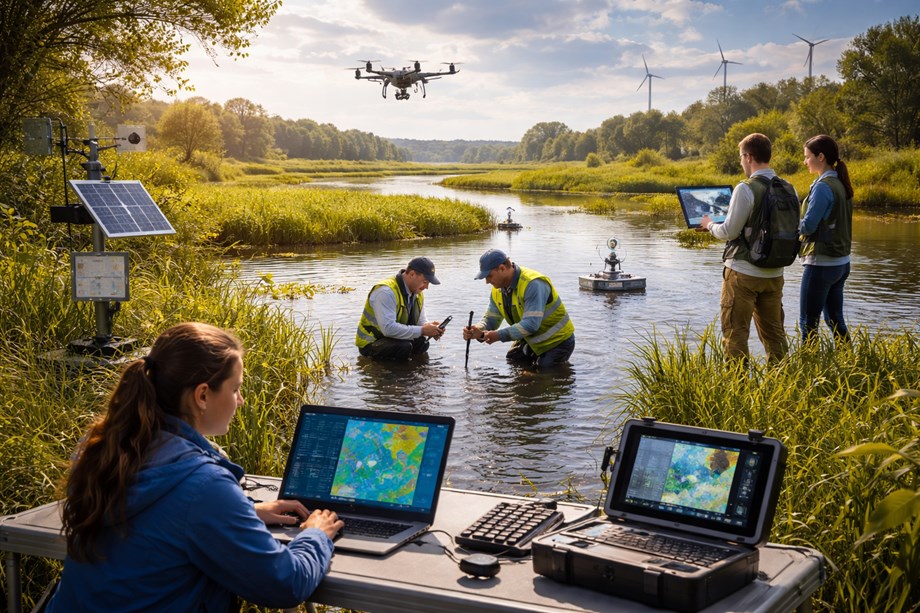
In the quiet corridors of Washington D.C., a small team of environmental scientists was on the brink of a breakthrough. Equipped with the latest machine learning models, they aimed to tackle one of the most pressing issues of our time: water governance. The team’s data-driven approach promised to revolutionize how policies are assessed, implemented, and, crucially, predicted. As global water resources face unprecedented stress, this innovative blend of technology and environmental science could provide the clarity needed to ensure sustainable management for the future.
The Current State of Water Governance
Water governance, traditionally reliant on historical data and expert predictions, is undergoing a profound transformation. According to a study reported by Reuters, deep learning algorithms can now predict the impact of environmental regulations with an accuracy that surpasses traditional expert models. The study, which specifically analyzed the Clean Water Act, highlighted how the recent Sackett ruling had significantly reduced the federal protection of U.S. waters, especially wetlands and streams.
Data-Driven Insights
Machine learning is not merely improving predictions. It is reshaping the entire framework of how environmental policies are formulated and enforced. The ability to simulate various scenarios allows policymakers to foresee the outcomes of different regulatory strategies before they are implemented, thus minimizing unintended consequences.
| Method | Prediction Accuracy | Policy Impact Prediction |
|---|---|---|
| Traditional Models | 65% | Limited |
| Deep Learning Models | 85% | Comprehensive |
Trends and Transformations
The adoption of machine learning in environmental governance is swiftly becoming a global trend. According to the MIT Technology Review, countries like India and Brazil are increasingly utilizing AI-driven methodologies to manage their water resources more efficiently. These methods are particularly beneficial in regions facing acute water scarcity, where every drop counts.
- Improved Predictive Capabilities: Machine learning models process vast amounts of data to predict future water availability and risks with precision.
- Real-Time Data Analysis: The integration of IoT devices with AI models offers real-time monitoring of water systems, enabling immediate response to issues.
- Enhanced Policy Formulation: Machine learning aids in crafting policies that are both proactive and reactive to the dynamic nature of environmental factors.
However, while the benefits are substantial, the implementation of these technologies also raises new challenges. Concerns about data privacy, the need for robust infrastructure, and the potential for algorithmic bias must be addressed to ensure fair and effective governance.
Industry Opinions
“Machine learning is one of the most potent tools we have at our disposal for addressing environmental challenges,” says Dr. Emily Thompson, a renowned environmental scientist. “It provides us with the ability to not only understand our ecosystems better but also to predict how they will respond to various interventions.”
Similarly, a report from TechCrunch emphasizes the importance of integrating AI-driven insights into current regulatory frameworks, ensuring that policymakers are well-equipped to navigate the complexities of environmental management in the 21st century.
Conclusion
The intersection of machine learning and environmental policy marks a significant evolution in how we approach water governance. As these technologies continue to mature, they offer the potential to revolutionize how we manage our most vital resources. For tech enthusiasts and environmental advocates alike, the call to action is clear: we must continue to innovate and collaborate to harness these powerful tools for the betterment of our planet. Dive deeper into this transformation and explore how you can contribute to shaping the future of environmental policy.
Related Reading
- Copilot Cowork: A new way of getting work done
- Building a LangGraph Agent from Scratch
- Rajasthan: Trains to Self-Diagnose Faults with Generative AI
“`

[…] How Machine Learning Is Reshaping Environmental Policy and Water Governance […]
[…] How Machine Learning Is Reshaping Environmental Policy and Water Governance […]