“`html
Elon Musk Calls Money ‘Worthless Database,’ Predicts AI Will Transform Economy Within 20 Years

In a world where economic stability often feels like a fragile construct, Elon Musk’s recent remarks have sent ripples through both the tech and financial sectors. During a futuristic-themed conference in San Francisco, Musk unabashedly described money as a “worthless database” and urged attendees to consider a future where artificial intelligence and robotics redefine economic principles.
The Visionary’s Perspective
Elon Musk, CEO of Tesla and SpaceX, is no stranger to making bold predictions. Yet his recent outlook on the economy is radical even by his standards. In Musk’s view, money is nothing more than a medium of exchange, devoid of intrinsic value. “The real economy, the true wealth, lies in goods and services,” Musk stated, challenging conventional economic wisdom.
According to Musk, the primary limit to economic output is labor, the human effort required to create and deliver these goods and services. He believes that within 10 to 20 years, this bottleneck will be eliminated by advances in artificial intelligence and robotics, allowing for a world where work becomes optional and goods are nearly free.
The Data Behind the Vision
While Musk’s ideas might seem speculative, they’re grounded in the accelerating pace of technological innovation. According to TechCrunch, the global AI market size is projected to grow from $62 billion in 2020 to $190 billion by 2025, emphasizing the growing influence of AI across various sectors.
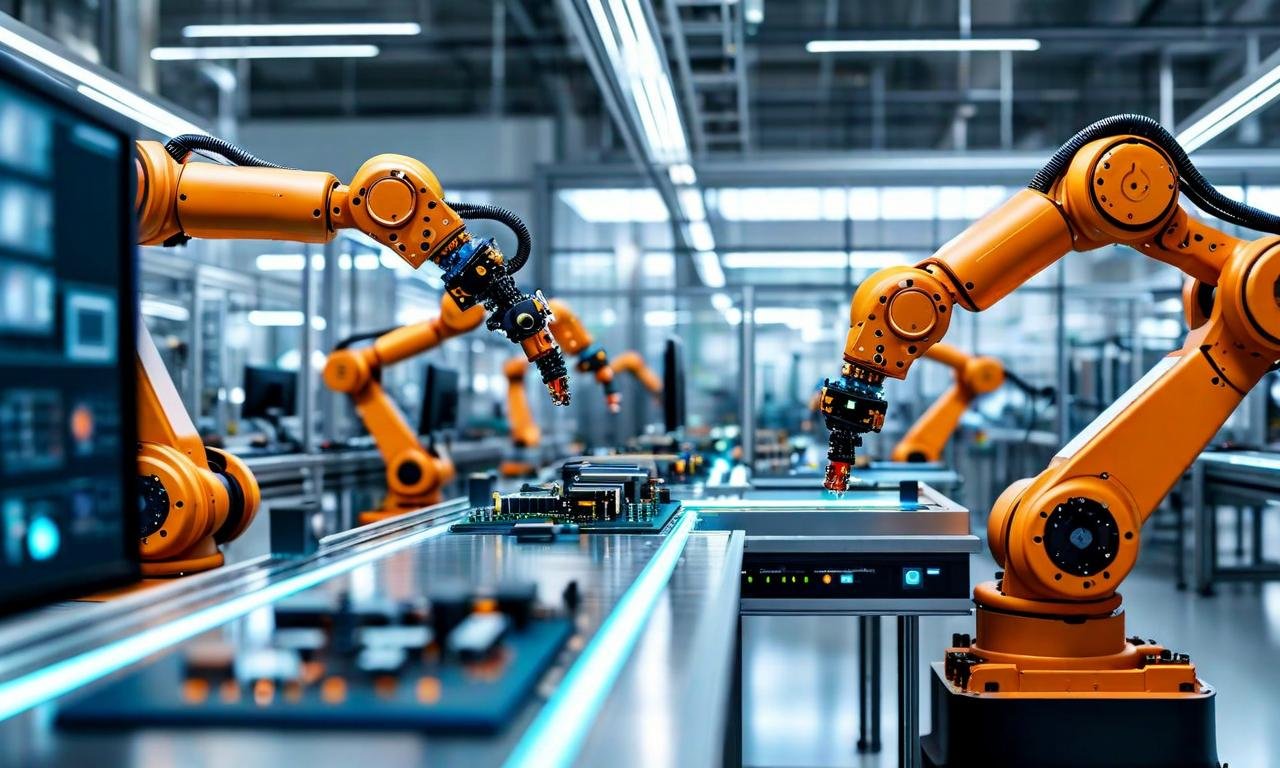
Furthermore, a report from The Verge highlights that robotics is on a similar growth trajectory. Industries from manufacturing to healthcare are increasingly deploying robots, driven by their ability to perform tasks more efficiently and with fewer errors than humans.
Industry Opinions and Counterpoints
Musk’s vision has not gone without critique. Economists and industry experts are divided on the feasibility and ethics of a machine-driven economy. Critics argue that the displacement of human labor by AI could lead to massive unemployment and social unrest unless managed thoughtfully.
However, proponents argue that AI could lead to unprecedented levels of productivity and create new, unforeseen job opportunities. As reported by Gizmodo, advancements in AI have already begun transforming roles in sectors ranging from customer service to logistics, suggesting a trend toward symbiosis rather than competition between humans and machines.
A Look at the Future
Musk’s predictions extend beyond just economics. He envisions a cultural shift where traditional concepts like retirement become obsolete due to technological abundance. The transition to this new world, however, will require careful navigation and ethical consideration.
| Aspect | Current State | Future State (10-20 years) |
|---|---|---|
| Role of Labor | Essential for production | Optional due to AI and robots |
| Cost of Goods | Determined by market and labor | Minimal due to automation |
| Retirement | Planned and necessary | Irrelevant with abundance |
Conclusion
Elon Musk’s vision challenges us to rethink the very foundations of our economic system. As AI and robotics continue their meteoric rise, a future where work is optional and goods cost almost nothing seems less like science fiction and more like an impending reality. For tech enthusiasts and industry leaders alike, the call to action is clear: we must prepare for a world where technology redefines not just how we work, but why we work. For more insights, readers can explore discussions on platforms like Reddit or professional networks such as LinkedIn.
Related Reading
“`


